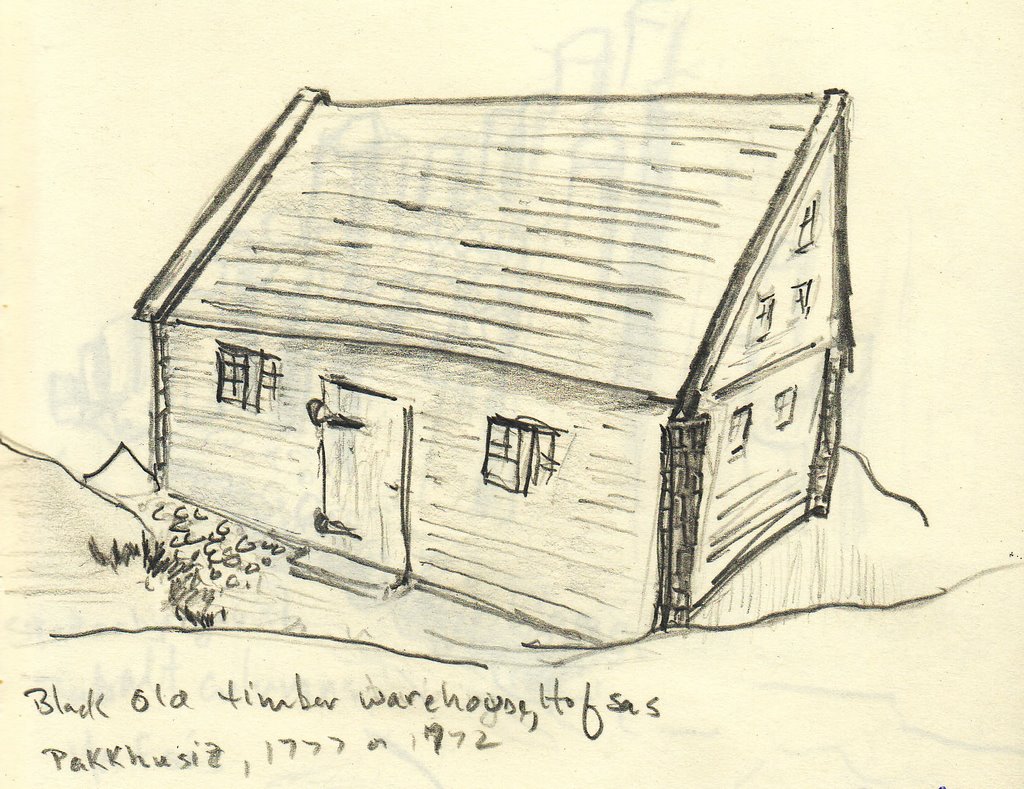
Showing posts with label Bill Holm. Show all posts

Aug 25, 2011

Happy Birthdays!

This year has been a big one for our family. Milestones birthdays include: 60, the "height" of the twenties, a quarter-century ... you'll notice I'm not naming any names ... and yours truly, who has to count up from a certain year, just to calculate her age.

Well, it is time to say Happy Birthday to youngest son Peter.

Peter's birthday present may well be "Goodnight Irene" evacuation orders from the Outer Banks. Possibly he'll be lucky, and miss the hurricane by the same small margin that we missed the Great East Coast Earthquake.

You see, we were in Minneapolis, the home state of Bill Holm, who shares today's birthday with Peter. This trip had a number of superlatives, including a few Icelandic ones:


I was given a really remarkable gift in Anoka from Professor Batty. It was Halldór Laxness' Salka Valka, in a hard-to-find, English translation. (See Laxness in Translation.) The lesson is, keep searching for that special book, and it will reveal itself to you. Thank you, Professor, for your generous persistence.

The Open Book space, featuring curious and beautiful reclaimed architectural features, where I got to see the offices of Milkweed Editions, publisher of Bill Holm's books, many of which feature Iceland. If you visit the Minneapolis area, be sure to stop by to see the intriguing space and the wonderful examples of book art.

Non-Icelandic highlights of the trip: walking/strolling, eating and fun times with Coco and Family; the best beer tour and tasting ever at Schell Brewery, New Ulm; the stunning collections at the Minneapolis Institute of Arts; the Baby Marx puppet exhibit at the Walker; great, independent coffee shops on every corner; beautiful weather; the Minnesota 150 Exhibit; the Minnesota Landscape Arboretum; and awesome bike paths everywhere that make Minneapolis the #1 bike city in the U.S.!

Three trips to Minneapolis/St. Paul in the past three years=good times!


Jan 3, 2010

A Merry Bill Holm Christmas

Cabins of Minnesota, by Bill Holm. Photography by Doug Ohman. Minnesota Byways Series. St. Paul: Minnesota Historical Society Press, 2007. 128 pgs.

I was delighted to receive a copy of this book from Jody in Minnesota. It is fun to read (Bill wrote the text), and fun to enjoy all the cabin photos--it may also give us some planning ideas for the Condemnation Plantation. As I read through it last night I was delighted to find that Bill spends the last chapter ruminating on time spent at his cabin in Hofsós, Iceland. When we met Bill in Hofsós he visited us at the house we were renting, and while we have photos of his house (cabin), we don't have any photos of him in front of it. Now that I own this book we do! A great Christmas gift, Jody; thank you.

Aug 25, 2009

Cosmic Connection


Two of my favorite people share a birthday today.

Our son Peter Sebastian turns 21 today--Congratulations, Pete--Happy Birthday! From Mexico to Iceland, Yosemite to Europe, you have expanded your horizons in 21 years, and I know you'll continue to.

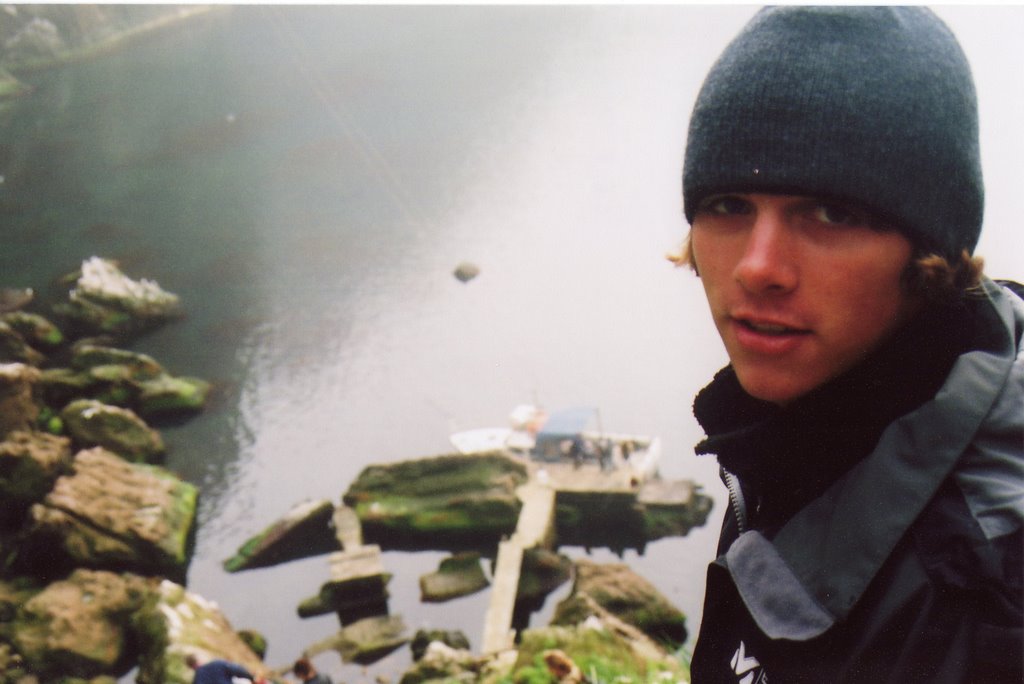
Pete in Iceland, 2006


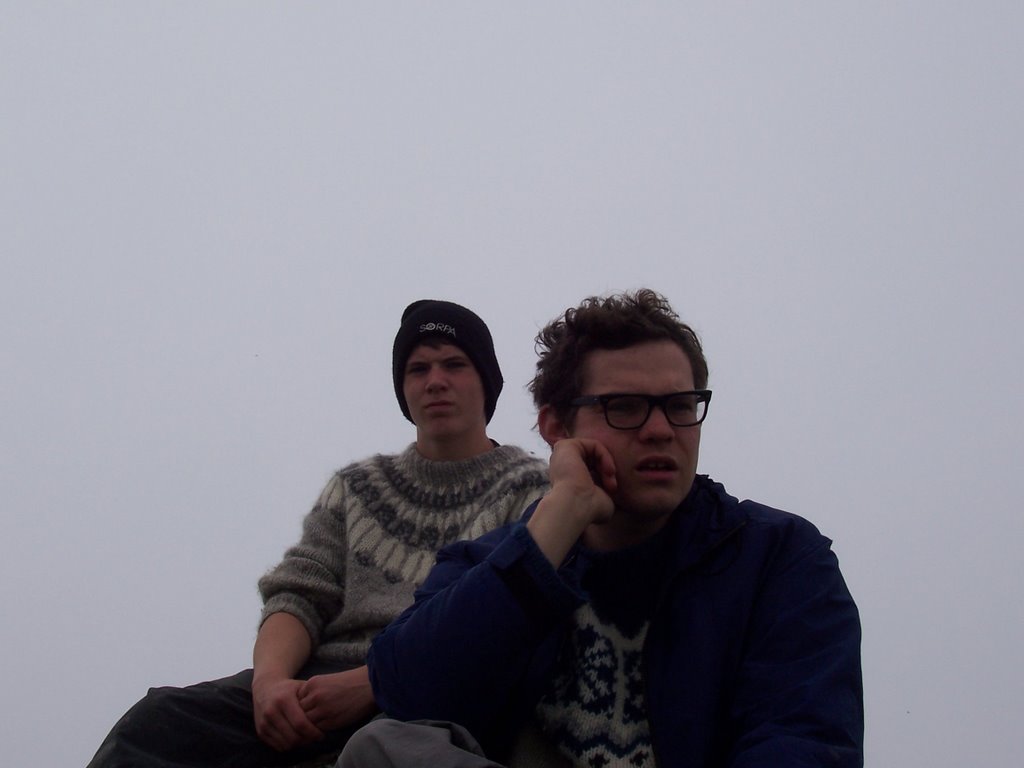
Bill Holm was born 66 years ago today, in Minneota, Minnesota. He passed away last winter, leaving friends around the world, and a legacy of varied and wonderful books. He expanded my horizons, infecting me with Iceland on the Brain. Pete, Gabe, John and I were fortunate to meet Bill in Hófsos, Iceland, in 2006. I'll never forget the bear-like warmth of his hug, or the passionate nature of his discourse. Thanks for sharing my son's birthday, Bill; thanks for sharing your life with all of us.


Still my favorite picture of Holm


Do you want to read one of Bill's books? Do you want to catch Icelandic Fever? I suggest starting with Coming Home Crazy: An Alphabet of China Essays, Eccentric Islands: Travels Real and Immaginary, or Windows of Brimnes.


Pete last Christmas

Feb 28, 2009

Fare Thee Well, Friend


Bill Holm passed away on February 25, 2009. His great warrior spirit will be a contentious wake-up call in the placid hereafter. Those who have avoided aspirations toward heaven, feeling it might be too dull, can now aim higher without fear.

Bill Holm was a life-long Minnesotan of Icelandic descent. He was an educator: he taught throughout his life, sharing his passion with students in Minnesota, China, Iceland. He was a gifted author of essays and poetry. Bill spent large amounts of time abroad, teaching, learning and writing about his experiences and insights. He was a devoted lover of Bach and an accomplished pianist; a Renaissance man whose intellectual curiosity might manifest itself in essays on log houses or genealogy, horses or cemeteries. Bill's anger at political and social injustice was ever ready to come out in conversation or essay; he never settled for complacency or the status quo.

My passion for Iceland can be directly traced to one of Bill Holm's books: Coming Home Crazy: An Alphabet of China Essays. I happened upon it at 17.5 Cafe, a used bookstore/coffee shop. Seldom has $6.50 led to so much enjoyment: this book was the beginning of Iceland on the Brain for me, which I can date to early 2002. When I read Coming Home Crazy for the first time, I was intrigued by the chapter "I for Iceland." Holm used the visit of his Icelandic friend Wincie to introduce Iceland, and to discuss differences and commonalities in China and Iceland. He was particularly eloquent in describing language and books:

...Chinese and Icelanders share an archaic impractical language, and an old literature. They are tribes of poets...That poetry gets them through the poverty with at least part of a soul intact and gives them insufferable pride, self-centeredness, even arrogance, that they also share.

After reading this chapter I wondered: what kind of books do Icelanders write? My love of Iceland began with its literature, which I was inspired to read by Bill Holm.

Bill's friends and admirers loved his warm, compassionate humor. A great example of this is a chapter in Eccentric Islands entitled "Iceland, 1999." Part of this chapter tells the story of a trip that Bill, his friend Wincie and her Reykjavik choir took to Sigulfjordur. Bill read this same story on a Prairie Home Companion show--broadcast from Reykjavik--in May of 2006. You can listen to the broadcast here. Be prepared to laugh and to cry.

My family and I met Bill while vacationing in Iceland during the summer of 2006. We went to Hofsos, where, since 1999, Bill had spent his summers in his small fisherman's cottage that he called Brimnes. Here, too, he taught an annual writers workshop. We went to Hofsos in the hopes of meeting Bill, and to visit Drangey Island. It was a great highlight of the trip that we were able to do both. Bill was just completing his book, Windows of Brimnes, while we were there. This past summer I sent him my copy to autograph. He received it on the birthday that he shared with my youngest son, and he sent back a card with the book, saying that he had just completed a book of Brimnes poems. I will remember Bill's birthday each coming August as we celebrate Peter's.

Of the many articles I have read about Bill Holm these past few days, my favorite was a description of the following tribute from Garrison Keillor:

Holm was an occasional guest on A Prairie Home Companion radio show...The program's host, Garrison Keillor, called Holm a great man.
"And unlike most great men, he really looked like one. 6 foot 8 inches, big frame, and a big white beard and a shock of white hair, a booming voice, so he loomed over you like a prophet and a preacher, which is what he was," said Keillor.
"I wish I'd been there to catch him as he fell," Keillor continued. "I hope his Icelandic ancestors are waiting to welcome him to their rocky corner of heaven. I hope his piano goes to someone who will love it as much as he did. I hope that people all across Minnesota will pick up one of his books and see what the man had to say."
by Melanie Sommer, Minnesota Public Radio,
Marianne Combs, Minnesota Public Radio
February 26, 2009

I know that people all across the world will continue to pick up his books and read them. Live on, Bill.

See all Iceland Fever posts on Bill Holm here.

Jan 1, 2009

Great Weaver from Kashmir

The Great Weaver from Kashmir, by Halldor Laxness. Translated from the Icelandic by Philip Roughton. Brooklyn: Archipelago Books, 2008. 450 pgs. Originally published in 1927.


This book didn't cast a spell over me as so many of Laxness' books have. The plot, characterization and descriptions aren't as elegant as his later works. The main character, Steinn, is not a likeable person, nor does he have the fascination and sympathy of Laxness' more developed anti-heroes (such as Bjartur of Summerhouses). Dilja, the other main character and Steinn's love interest, is tepid. The book clearly was written by a very young man: it takes itself too seriously. The sometimes gentle, sometimes raucous sense of humor that is woven through most of Laxness' books isn't evident here.

The plot concerns a young man who is handsome and charismatic, egotistical, possibly brilliant, and entirely selfish. Steinn relates that his most precious gift is that he has been given "an aesthetic soul, the ability to worship the glory on the visage of things." This is an important distinction, for he struggles with seeing the essential rather than the superficial. He exemplifies the opposing natures within man: soul and body, perfection and perdition. The entire novel deals with Steinn's efforts to find, achieve and maintain salvation--at whatever cost to others.

Steinn's family and friends in his native Iceland are introduced, and he then departs for Europe to travel, write, and search for perfection. In a chance encounter on a train, Steinn meets a French monk, Father Alban, who becomes the key to Steinn's self-discovery. Steinn pretends to be interested in learning about Catholicism, but instead simply expounds his own pretentious, shallow ideas to Fr. Alban. Later, as Steinn becomes disillusioned and hopeless, he seeks out Alban, and in desperation asks him for help. Alban serves as a teacher and spiritual guide, and Steinn gradually comes to desire the love and salvation of God. But he vascillates, and falls back into false arguments and self-justifications. Steinn's story becomes tedious as his inability to learn from his mistakes, and his pretentious self-importance wears thin.

Yet the book has some very rewarding passages. The only way I can account for the beautiful eloquence with which Fr. Alban elucidates the love of Christ is to assume that the words spring from a fountain within Laxness himself. Laxness spent time at a monastery in Belgium in his early twenties, and came to embrace Catholicism. Presumably much of Steinn's questioning and discovery mirrors Laxness' own. The passages narrating the religious journey are some of the loveliest explications I have read of God's love, outside of the Bible.

This is where the Weaver from Kashmir proves its worth: it asks the important questions, and attempts to answer them. Where does man's idealism lead, what is our journey, how do we seek perfection, what is the highest value in our life? How do we avoid fooling ourselves that what we want is what is best for us? Does God exist and does he exemplify perfection, does he forgive us and offer us redemption? What should be sacrificed in order to gain salvation?

Finally, another compelling reason I enjoyed this book is because it caused me to ask the following questions about my beloved author, Halldor Laxness. Did his early religious experiences enable him to see how humble all men are, and how we are all beloved in the eyes of God? Did this help forge Laxness' affinity toward people who are downtrodden, imperfect, simple, common...and uncommon? What led to Laxness' own empathy for people who strive for perfection in their own ways, and fail countless times? Is this the beginning of his unusually compassionate portrayal of the beauty and the value in the most imperfect characters that he created?

The Great Weaver from Kashmir has been described as the first major novel of a world-renowned novelist. Why did it take so long for it to be translated into English? Despite the failings of the book, I can't imagine. It is a fascinating glimpse into Laxness' personal life, and into his beginnings as a writer: he wrote it when he was in his early twenties. And it offered me a chance to ask so very many questions, and to enjoy thinking about the answers.

When I finished this review (a wee bit late!) I had the luxury of enjoying both Professor Batty's review, and one written by Bill Holm. Batty once again sums things up cogently:
If Laxness hadn't been such a good writer this book would be as insufferable as trying to engage in meaningful conversation with a verbose, narcissistic young man.
Bill Holm's review really added to my understanding and enjoyment of the book. He has some interesting comments on Laxness' impact on Icelandic literature in the 20th century, and some fascinating insights into his beliefs. Holm's review reminded me that Laxness' books were effectively unavailable in English until recently. I pointed out to my husband that my Laxness conversion wouldn't have been possible 12 years ago, when English editions weren't available. He replied laconically, "that is what has prevented you from having to learn Icelandic." That, and my intellectual incapacity, I fear.

Holm has a quote I loved:
Americans are sometimes not too sure where or what Iceland is, but for the literary, it is a sort of holy land...
Thank you Batty, Bill, and Halldor!

And I'll end with a quote from The Weaver that appealed to me:
He became sad with homesickness, like an ancient Icelander.


Jul 25, 2008

Windows

Windows of Brimnes: An American in Iceland, by Bill Holm. Minneapolis: Milkweed, 2007. 216 pgs. Endpapers include maps of Iceland and of Skagafjörður.


The challenge: Prof. Batty and I were reading this book at about the same time, so we decided to post our reviews simultaneously. Thus the reader can be assured of complete objectivity... ahem.

Who is Bill Holm? He is one of my favorite authors, an educator and seeker of knowledge; an irascible, radical, cranky defender of liberty and justice. You’ll find many references to him in this blog by using the search box in the upper left corner. This is his most recent book—Bill has written or contributed to over a dozen other volumes of poetry and prose, fiction and nonfiction.

Sveit is a recurring theme in this book. Sveit can be summarized as community, or, perhaps, what connects to your heart.

Who or what is my sveit? According to Bill Holm’s definition, it might be the readers of this blog—people captivated by Iceland, and by Icelandic literature. One’s sveit might go beyond family and borders, especially when assisted by books, or by the internet. The internet has enabled a group of bloggers who are tied together by things Icelandic to be a community of sorts. Holm himself is responsible for the Icelandic sveit I feel a part of…not because he writes blogs, but because his books piqued my interest in Icelandic literature, and, subsequently, Iceland.

Bill Holm’s sveit is grandly large, composed of Minnesota, Iceland, China, choral music, Bach and Halldór Laxness, just to begin the list. And Brimnes.

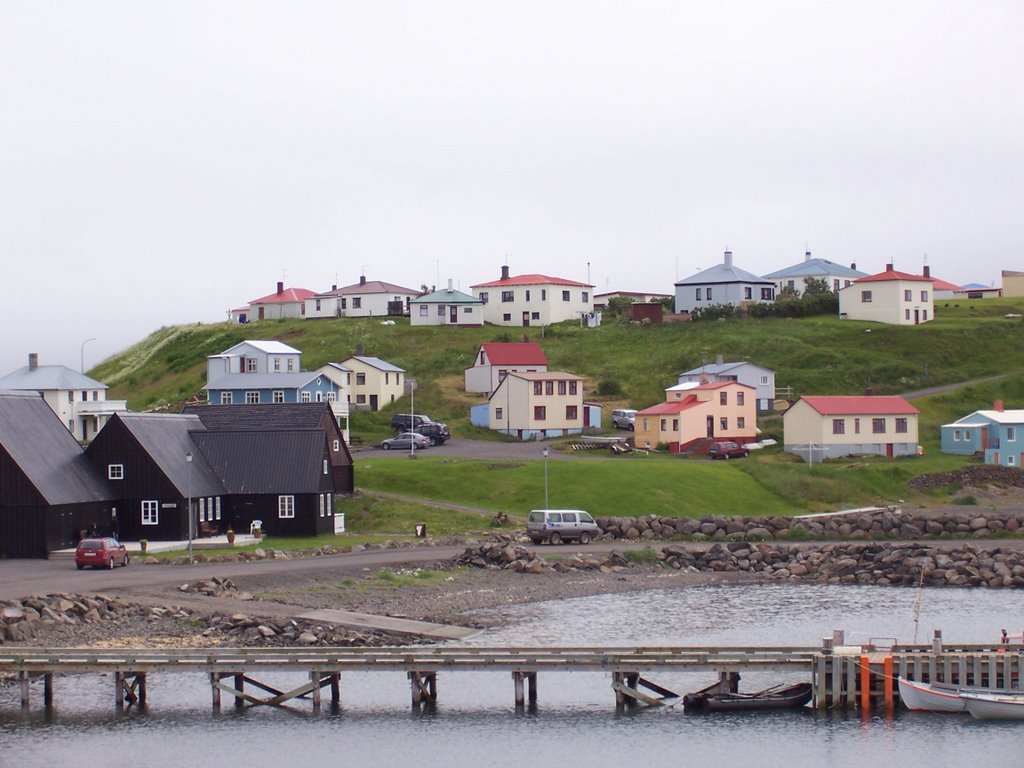
As Holm tells it, he had visited Hofsós, in northern Iceland, a number of times. “By my third or fourth trip to Hofsós I had fallen completely in love with the place, so much so that it had become my imaginary sveit.” When he discovered that Brimnes, the tiny cottage he was staying in, was for sale, he immediately decided to purchase it.

You can imagine the joy I felt visiting Hofsós in 2006, where my family and I met Bill Holm, and experienced first hand the community of Hofsós where he now lives for three months of each year. During our visit with him he told us of his upcoming book: The Windows of Brimnes. In fact, the last chapter of the book, Fog, was written at the time we visited Brimnes, and fog is exactly what we found there.

Holm does not choose seclusion in a remote town in Iceland as an escape. The chapters in this book demonstrate that he is always thinking, looking: forward and back in history, and from Iceland to the United States and back. The first and last chapters are about Brimnes, Holm’s windows there framing not only the book itself, but all of its internal inquiry.

One chapter focuses on Skagafjörður, the fjörd on which Hofsós, and consequently Holm, find themselves.

Skagafjörður is a fat fjörd with a wide mouth open to all the light it can drink, every last smidgeon it can suck out of the sun, or even an intense winter moon or the northern lights…This is…a laughing Buddha fjörd…a fjörd that embraces the visible world.

Do I anthropomorphize a fjörd too much? Nonsense, I cannot anthropomorphize enough. If people have characters peculiarly their own, why should we deny one to a fjörd?...Your place on this planet…is where (among other things) the light feels right to you.

And, he concludes, “If you wish to observe the Icelandic landscape, you had best like the long view.” Amen for the long view! After you contemplate the long view in Skagafjörður, Holm says, “All you need now is a few lines of properly rhymed Icelandic poetry to mumble to yourself as you begin simultaneously weeping and laughing.” Many is the time, reading Holm, when I have simultaneously laughed and cried.

Being a part-time resident, Holm offers some insights into how Iceland is different in less-than-obvious ways:

The modern Icelander who has not left the island has thus never seen a reptile, nor an amphibian, nor skunk, coyote, muskrat, raccoon, rabbit, gopher, beaver, wolf, bear, cougar, nor any large ungulate like elk, moose, or bison. Neither has the Icelander been tortured by mosquitoes, biting blackflies…nor any of that army of insects pests…

Further, most Icelanders have not experienced thunder on their native shores. Strange to consider!

Throughout the book runs the thread of memory, ancestors, and history. In particular, Holm focuses on the Icelandic emigrant to the New World—his ancestors. His chapter “The Melancholy Quotient” takes a look at the history of some of his relatives: “Unless some damn fool writer tells the family secrets, they will soon disappear into the oblivion of history. And what confidence have you that whatever version you hear of these stories, or judgments of these characters, is accurate—much less true?”

This quote of Holm's reminded me of my husband’s genealogy interests: “Genealogy—the melancholy quotient—offers those who pursue it with care, intelligence, and no wishful thinking both a wedge into one’s personal history and the connection of the history to the larger history of human beings on the planet.” Once again Holm discourses on the meaning of truth: “genealogy casts a skeptical light on those who claim to have corralled truth…One more fact will always turn up just when you least expect it, overturning all your presumed certainties.”

Holm tells many stories of Minneota, MN, and of areas near Hofsós, as well as the areas of Iceland where his relatives came from. Thinking of the emigrant experience, Holm empathizes with their emotional upheaval:

But for the Icelanders—as for every other immigrant group to this day—the wound to the soul caused by the abrupt amputation of language, culture, history, folklore, landscape, and habits of mind and body was too much, too sudden for instant adjustment, for melting immediately into the new pot. The phantom limb still ached…

Holm thoughtfully considers the Icelandic horse; the nature of silence and contemplation; religion; and formal and informal belief systems. His anthem--consisting of faith, anger and grief over senseless destruction of lives and of nature, impatience with ignorance and false piety, praise of beauty in music, nature, literature, individual human lives--rings as strong and true in Brimnes as in his other books. Talking to Bill Holm is the same as reading him: he has strong feelings and opinions; he remains paradoxically idealistic, despite disillusionment; and he is ready and eager to compel others to think.

I learned that Bill Holm’s birthday is August 25th. This birthdate is shared with my youngest son: another ardent, observant seeker of truth. I hope that my virgo son will find fulfillment, as Holm has, in seeking and telling the truth, as he sees it, throughout his life.

Check out Flippism is the Key for Batty’s review of Windows of Brimnes! And this site, where you can listen to Bill, will give you a more personal look at the man and the artist.

As you can see, my signed copy is back from its trip to Minneota.


May 7, 2008

The Revolution Has Begun

An Epic Saga:

First, the Revolution. That's where we convince the world that Halldór Laxness is an author to read. One person at a time, the world will discover that Laxness is a great writer, and that reading one of his books is just the beginning. Bill Holm is a card-carrying member of this revolution; he gives away copies of Independent People that he has found in used bookstores. Professor Batty is a member*. So am I.


Rockwell Kent, International Workers Order, 10th Anniversary

Picture your humble revolutionary (:me) at the Book Exchange today. I always carry a credit of between $25-$75. there, so anything I buy is, well, free. Today I discover a treasure: a hardcover, first (English) edition of Independent People (like the one pictured here). For $5.! (If that sounds good to you, buy one yourself for the same price, online.)

But that's not all! As I walk past the table where the staff sit to read, talk, read, eat lunch, read, eat chocolate, read, joke..you get the picture...I see a new paperback copy of...you guessed it...Independent People. As I pay for my purchases (not), I ask the man helping me (whom I recognize by face but not by name), "who is reading Independent People?". I think I actually asked, "WHO IS READING INDEPENDENT PEOPLE!!!?" Turns out, he is. "I heard it was really great, and decided I'd read it."

What a happy coincidence! Here's where we quote Batty: "One reader at a time, Rose, one reader at a time."
*
Batty seems to concentrate on giving away copies of The Fish Can Sing.

Jun 7, 2007

Playing the Black Piano

Holm, Bill. Playing the Black Piano. Minneapolis: Milkweed Editions, 2004. 132 pgs.

(No puffins because I don't rate poetry. I enjoy it, but I'm not a critic.)

Holm fans can rejoice in this book of poetry that plays familiar themes, in new ways. Bill's refreshing anarchy and warm humanity fill this lovely book, and his humor is compassionate, scathing, ever changing.

Music, a central part in Holm's life, flows through many of these poems. Another theme that looms large is death. Death may be final, but friendship doesn't end with death in Holm's world; a number of these poems pay homage to people he has loved. When Bill knows from his friend's handwriting that death is approaching, I recall how my Mother's handwriting betrayed the same message; one that I was not yet able to read.

For you lovers of Iceland, there is Part I: A Bowl of Thought. This section weaves in Skagafjord, Sauðárkrókur, Hofsós, and Holm's beloved cottage in Hofsós, Brimnes--all by means of evocative poetry.

If you love poetry, music, or Iceland...you'll love Playing the Black Piano. Bill, my debt to you keeps getting heavier.

Apr 25, 2007

I Discover Bill Holm, and an Important Date is Born

Coming Home Crazy: An Alphabet of China Essays, by Bill Holm. Minneapolis: Milkweed Editions, 1990. 251 pgs.


~Bill Holm: Minnesotan of Icelandic heritage, poet, essayist,
teacher, writer-in-summer-residence of Hofsós.~

My first introduction to Bill Holm was a paperback that I happened upon at 17.5 Cafe, which had a small used bookstore in addition to good coffee. Seldom has $6.50 led to so much enjoyment. This book was the beginning of Iceland on the Brain for me, which I can date to early 2002, when Jonathan was working at 17.5. Unfortunately I can't provide the day and time.

Holm taught English and literature to Chinese teachers at a polytechnical college in Xi'an. Holm observed, laughed, cried, made friends, suffered, got sick, and got an education at the same time that he was educating others. Isn't that the way it is?

His book is structured alphabetically--which is crazy, because there is no alphabetizing the Chinese language! But Holm's way of thinking, looking at things, and expressing himself, while idiosyncratic, is certainly not crazy. His alphabet chapters are a way of structuring some of what he learned and observed while living in China...they tell of his abhorrence for the politicians and the bureaucracy, and of his admiration and affection for the people he met. Each chapter is a microcosm of Chinese society, an anecdote of his life there, or both.

I'll leave you to discover the joys of E for erhu (which I had never heard of but came to love), U for underwear, and B for book smuggling.

When I read this book for the first time, I was intrigued by "I for Iceland". Holm uses the visit of his Icelandic friend Wincie to introduce Iceland, and to discuss differences and commonalities in China and Iceland. He is particularly eloquent in describing language and books:
...Chinese and Icelanders share an archaic impractical language, and an old literature. They are tribes of poets...That poetry gets them through the poverty with at least part of a soul intact and gives them insufferable pride, self-centeredness, even arrogance, that they also share.
After reading this chapter I wondered: what kind of books do Icelanders write? And that was the beginning.

Thank you, 17.5 Cafe. Thank you, Bill Holm.

Jan 29, 2007

Icelandic Shipper Embraces Richmond

...Richmond embraces Icelandic Shipper. Today the Richmond Times Dispatch announced that the Icelandic container line, Eimskip, has become the second international shipping line to come up the James River to dock and unload at the Richmond Port Authority. Eimskip brings fish and bottled water to Richmond, and returns to Reykjavik with cereal, apples, machinery parts, cars and campers. Stops include Boston, Nova Scotia, and Newfoundland.

Dock workers tie up the Icelandic freight liner MV Bruarfoss V as it makes its initial call at the port of Richmond.

28 years ago Minnesota writer Bill Holm, beginning his Fulbright year in Iceland, left on a container vessel out of Portsmouth, Virginia to begin an 11-day voyage to Iceland in December. While the trip was cold and the seas were rough, the Northern Lights were transcendental!

Will I be able to convince Eimskip to take a paying passenger (or two) on one of their trips? Stay posted!

Jan 15, 2007

Still True Today

Bill Holm, Prairie Days (originally published as The Music of Failure), 1985:
A saga reader visiting Iceland now, expecting blood-thirstiness or violence from the population, is in for disappointment. He finds instead a mild, harmonious, democratic welfare state, just and literate, almost without murder, theft, or any violent crime. Doors are left unlocked and lost billfolds returned to strangers.

Jul 25, 2006

Goodbye Hofsos and Holm


John and I have an eventful morning while the boys sleep late. I had a great idea last night, just before I fell asleep. I was thinking about the hours Gabe and Pete have spent kicking rocks (acting like the rocks were hacky sacks or soccer balls). I figured that I could find a ball at the market, and it would be overpriced and poor qualilty, but it would get a lot of use. So John and I venture out, to the laundry, the bank, the post office and the market. Along with the obligatory pastries we buy a soccer ball! Just what you'd expect for the equivalent of $10. USD., but a very worthwhile investment-- by the end of the trip the soccer ball will be completely worn out!


After breakfast we walk along a little path down to huge basalt column stacks, hexagonal in shape, along the shore. John stops to sketch them, naturally.


We walk through town to the Icelandic Emigration Center museum, which is a wonderful place for kids and adults alike. It focuses on the Icelanders who emigrated to the U.S. and Canada, primarily at the end of the 19th century. What is so great about the museum is that it provides lots of personal histories with pictures, letters, newspaper clippings, and objects from people's daily lives. All of the exhibits are done in a very tasteful manner: not slick, but artistic and professional.


John notices Bill Holm outside talking to someone, so I go out to see him. I realized last night that during our previous conversation I never told him that his books were the impetus for my reading Icelandic literature, and that he was directly responsible both for my passion for Iceland, and our being here on this trip! I am able to convey my heartfelt thanks for the way in which his books have led me on a path to where I am right now. I confess to disappointment that I don't have his books along so that he can sign them (Antonia made me take them out during our "Take Out" packing party), and he tells me to send them to him in Minnesota to sign. Thank you, I will!

We talk some more about the book he is working on, Icelandic horses (his next chapter--I tell him about my Shih Tzu/tolt theory, and he is unable to confirm it), and he confesses amazement that we'd gone to Drangey yesterday in the fog! He is a little put out that Hofsos has been foggy every day for weeks. I am enjoying Hofsos anyway, but I can imagine how stunning the view must be when you can see across the fjord to Drangey and the snow-capped peaks beyond. Bill recomends that we visit Holar, Siglufjordur, the Icelandic Folk Music Museum and the Herring Museum--all places we want to go, but which will have to wait for our next trip. We have a hug and kiss goodbye; alas, John isn't around to take my picture with Bill Holm. I have great memories, though, of meeting the man whose words introduced me to Iceland.

We head back to our house, Karastigur, to eat lunch with the boys and pack up. Just as we sit down to eat there is a knock at the front door. Who can it be?

I open the door to discover a bank officer! There was a little misunderstanding at the bank when John signed over two traveller's checks (in the wrong place) resulting in this personal visit by the banker, who politely requests that we stop by to rectify the matter. Only in Iceland would a banker pay a house call!


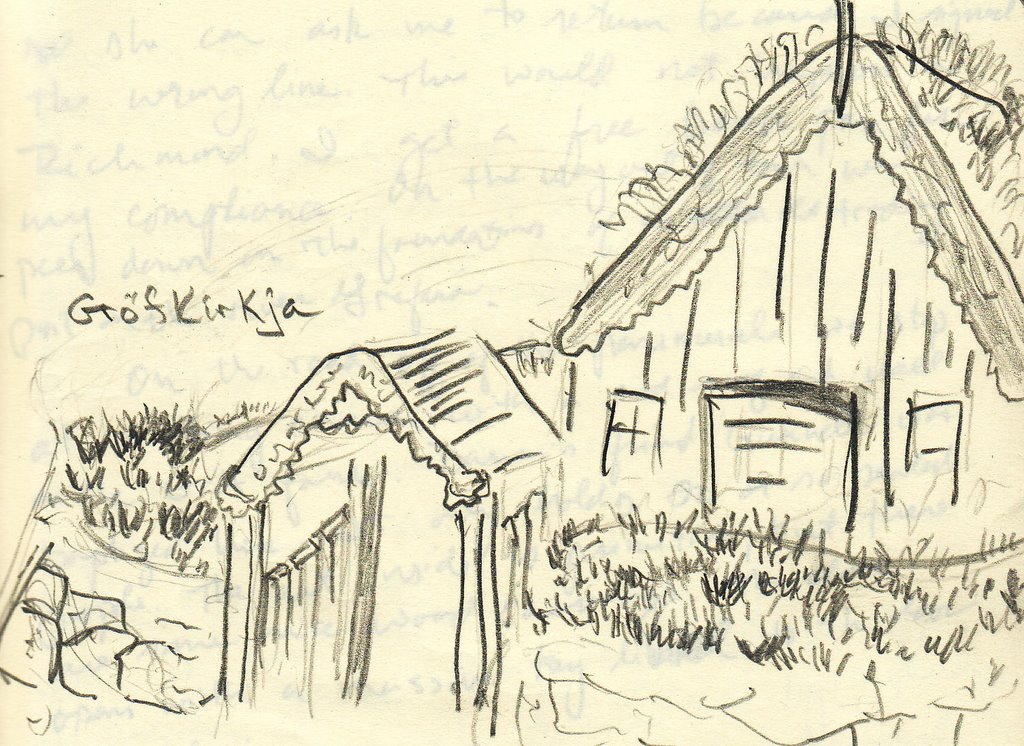
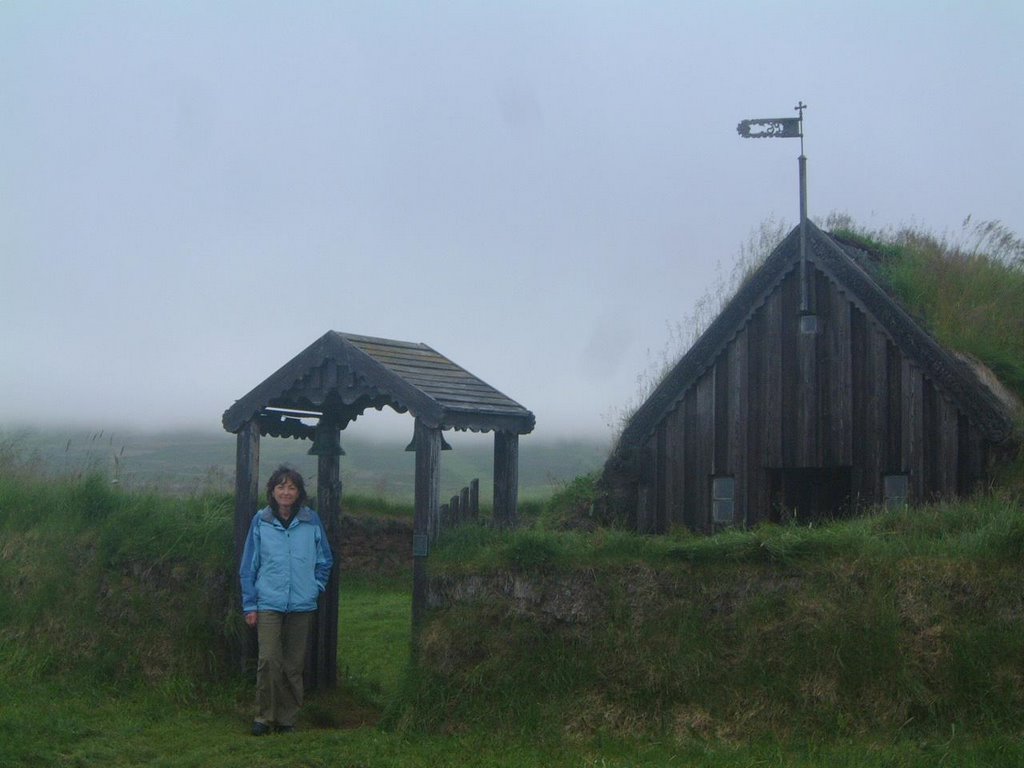
We pack up and, after a phone call to the owners, we simply leave our payment on the table, door unlocked (we never had or needed a key). Outside of town we stop by the little turf church at Grof where Gunnella was baptised. The picture doesn't convey how little--it seats just 20 people, and those people had better be careful when they stand up! Even shorties like me will bump their heads on the low rafters.


Next stop is the Glaumbaer Folk Museum, which features a large complex of 7 or more turf houses once owned by a wealthy priest named Snorri. The adjacent church has flowers and bushes planted on top of the graves, and inside the church is an organ made entirely of pine--keys, pipes and all.

In Blonduos, where Gunnella once lived and taught school, we stop at an Information Center and we meet a very gregarious young man who tells us about his trip to Drangey: how his friend pushed him off Jon's boat into the water, and how he exacted revenge.

The rest of the drive to the Snaefellsness penninsula is through lovely, scenic areas where many of the saga stories took place. We arrive at Arnarstapi late--too late for dinner, due to an infestation of Danish tourists and the fact that it is so remote that there is no alternate place to eat. They agree to fix us sandwiches, however, so that we don't starve.

The dining area is a lovely turf roof building with clean, light pine walls and ceiling. The building we are lodging in, however, is the most institutional of any place that we have stayed, resembling dorm rooms. But there is a very pleasant common room with a remarkably well-equiped kitchen for all of us to use.

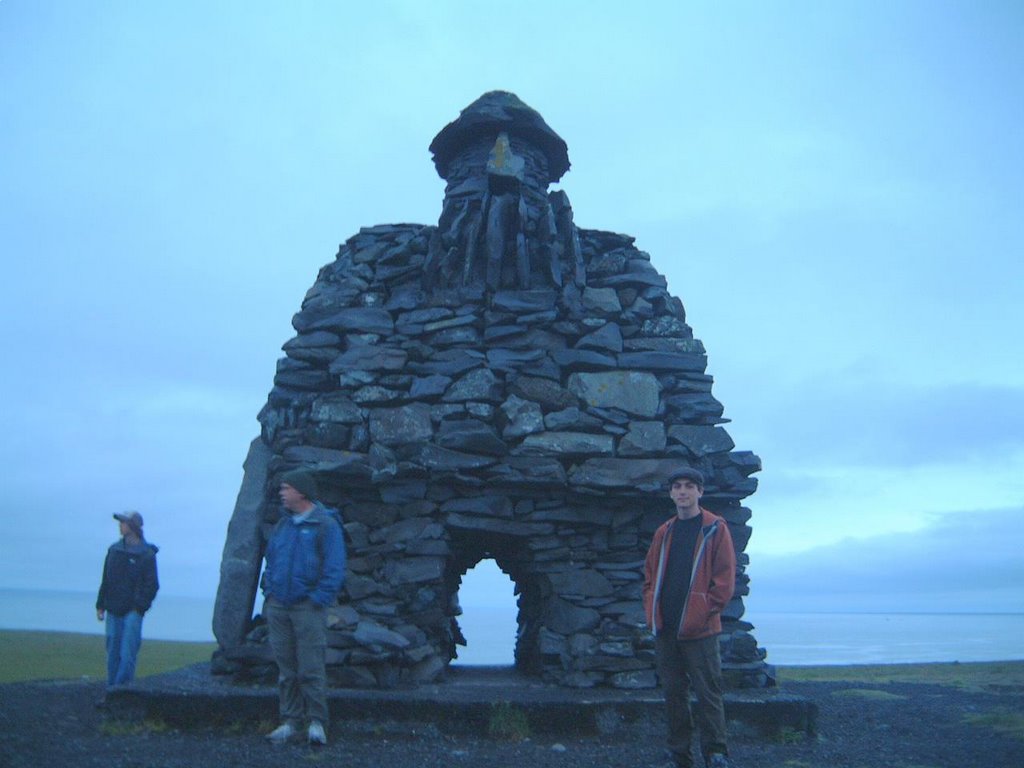
We follow our light dinner with a late evening walk in the longlasting twilight, a walk fraught with peril due to the kria. Kria are birds that are fiercely protective of their nests. Unfortunately, they are well equiped to defend with their long, curved, sharp beaks. The birds screech while dive-bombing any intruders. Their intimidation techniques are very effective: smart people steer clear of their nesting areas. As we walk out to the huge rock statue of Barthur, guardian of the area, we meet a mother who tells of being on a golf course where kria attacked her head and drew blood!

Enough excitement. Time for sleep.

Jul 24, 2006

An Epic Climb

Up early, with butterflies in my stomach. John and I go to buy groceries, and process some more laundry. While in Hofsos we wash 5 loads, driving the car back and forth from our house to the apartment with the laundry facilities. It would have been much more practical to have had the use of a bicycle for going back and forth...Hofsos is so small, and the locals must be hard pressed to think of an explanation for why these crazy foreigners could possibly need to made so many shorts trips in a car, right in town!


Still foggy. With a growing sense of relief I call Farmer Jon. (Why is he called Farmer Jon, when he is a boat captain? That's because he owns a farm on the fjord, an ancient one called Fagranes, where the body of Grettir is supposedly buried. Grettir's head is elsewhere.) Farmer Jon, his sons, and other assorted relatives man the boat when it goes out, in addition to farming. Similarly, Valgeir's daughter got us settled in our lodging because Valgeir and Gudrun, her parents, were out on their farm doing end-of-summer farm chores.

I ask Farmer Jon's son if our trip will be postphoned due to the fog. "We will go, absolutely," he says. We quickly pack our warm clothes and lunch, and drive around the fjord to the harbor, in such a rush that there isn't time to worry. We pull away from shore in a small boat with about 20 other people on board.

The trip is windy, cold and wet. Water splashes into the small craft; my jeans are soaked before we even arrive at Drangey. The trip takes a little more than an hour. I am feeling really keyed up, between excitement at seeing the sight I have longed to see the most in Iceland, and a great deal of nervousness regarding the dangerous climb ahead. Gabe and Pete compare notes along the way.

First we glimpse the tall escarpment next to Drangey, then Drangey itself rises majestically out of the mist. We hear an incredible din...the sound of millions of birds swooping and calling. The cliffs of Drangey are whitewashed in huge swatches. After sailing alongside a number of craggy inlets our boat pulls up to a dock, where we are dwarfed by the vertical cliff at our side.

Our guides up Drangey are Farmer Jon's son and his nephew. Jon himself is about 75 years old, and has made the climb thousands of times. He may be old enough to enjoy staying back on the boat this trip, but he is still "frisky," as Bill Holm describes him...after all, he has a son who is 20 years old. We thought Steinn was Jon's grandson but Holm enlightened us: "that's his son, the sly Fox!" Steinn and Ajalti shepherd us up the cliff, carefully providing assistance or confidence to those of us who are feeling less than heroic.

John describes the path:
...daunting, but not as frightening as we had feared. The slope is steep, and wooden boards are dug into the earth, or primitve stairs, switchback up. Ropes are fastened to poles a good way to give some security. An iron rod is driven into the cliff at one tight turn to grip. The last 40 or 50 feet take us up a steel pipe ladder that is vertical.
A short way into the climb we encounter a little alcove/altar in the rock, with a large bronze plaque that has the Lord's Prayer in Icelandic. One of our party is a baker from Reykjavik--the only supplier of natural sourdough bread in Iceland--and he drops to his knees and crosses himself as he prays (he has completed this climb previously, so presumably knows the need for divine intervention). I ask Steinn if it must be prayed in Icelandic and he reassures me: "I think He speaks many languages."

We arrive at a large meadow. All of the island is covered in lush green grass that you sink into up to your knees. Wildflowers and colorful mosses are everywhere. To our surprise, it isn't just one or two meadows atop the huge cliffs: it is one followed by another which you reach by climbing little hills. There are about five meadows in all, but in each one you can see just the one that you are in. I had thought that the best view of the day would be arriving back at the harbor alive, but I was wrong. The best views of the day are on Drangey!


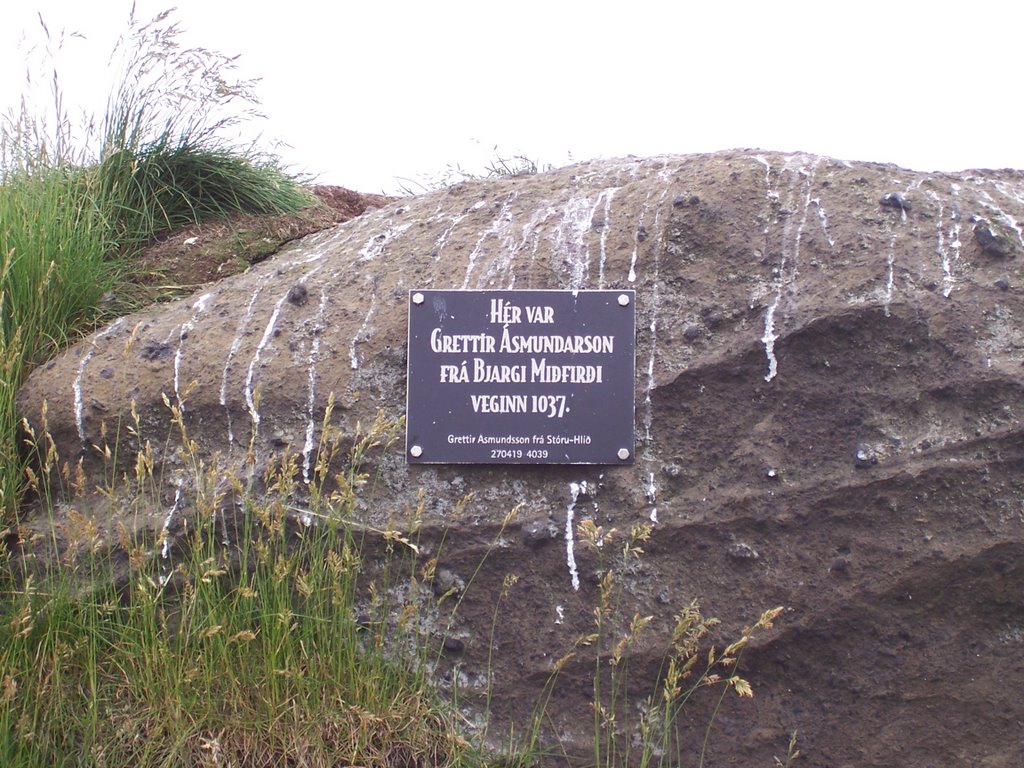
The group of us wanders from meadow to meadow, and we gradually regroup in the grassy area that contains the rocky remains of outlaw Grettir's abode. A plaque informs us that here he lived, and died in the year 1037. We sit or lay down in the grass and listen to Steinn relate the story of Grettir.

Steinn is an art student who wears Buddy Holly-style glasses. (Cousin Ajalti is an appealing 15-year old, following in Steinn and Jon's footsteps--fast becoming a competent guide and storyteller himself.) Steinn's sense of humor is dry, and his descriptions are sometimes quaint. When he talks about Grettir's half-brother being put in prison, he calls it a "dirty basement." He refers to the bewitched log with runes that was Grettir's undoing as "bad wood." Steinn is competent in 4 or 5 languages, and easily switches from one to another as he tells the story in 2 languages, with asides and explanations in several others. I sit rapt at his feet. I know the story and anticipate each event as he relates it. It completely chokes me up to find myself here, in the place where Grettir once lived, hearing his story told in person by someone who grew up climbing these cliffs and hearing this story. Steinn does the tale perfect justice in his telling of it.


As we continue our walk along the periphery of the island I think that it would be impossible to be any happier than I am right now. The clouds are low, so that we can seldom see the water below. While it is unfortunate not to see the 360-degree views of the huge fjord, it is wonderful in a different way. The height isn't so scary, and we feel warm, cozy and enclosed in our own little world on the island.


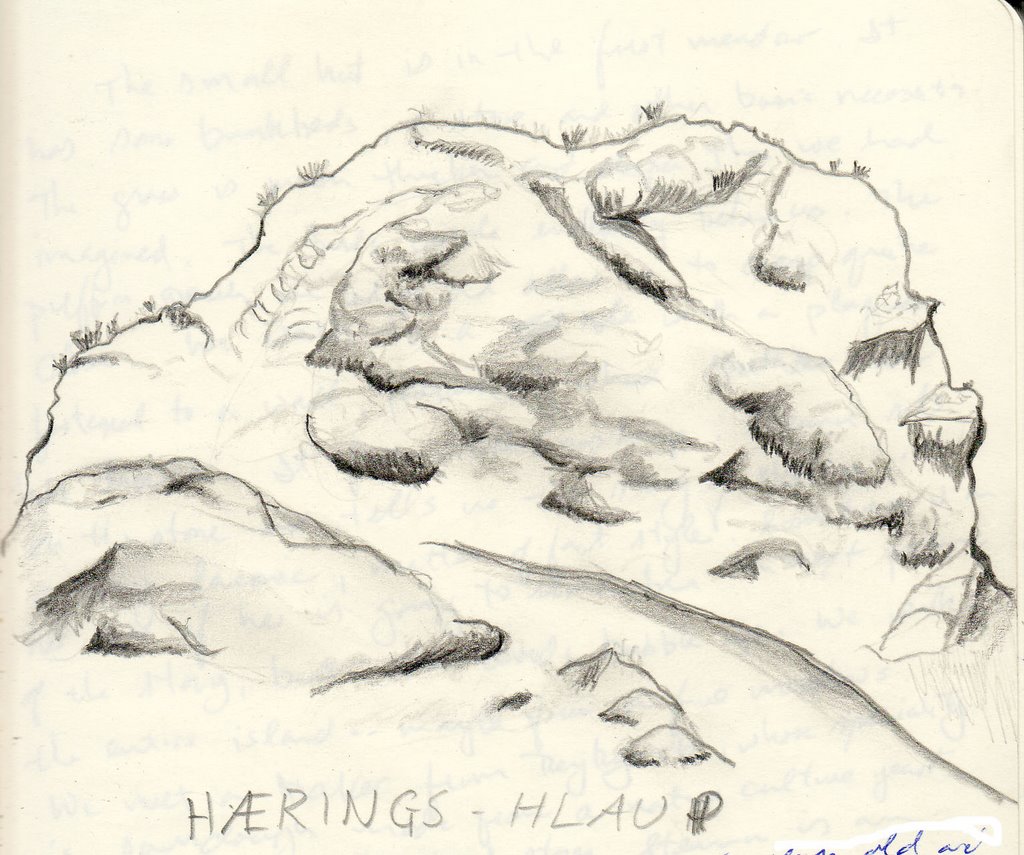
We see Haering's Hlaup, and as we sit in the meadow to rest and eat, John sketches the Hlaup, or Leap, where Haering escaped Grettir and found death on the rocks below. Steinn compliments John's art. In return, we teach Steinn and Ajalti cool US slang such as "the Whole Steamboat" and "Boy Howdy!" No doubt these will come in useful for them when they want to impress female tourists.


At one point Steinn reaches in a little hummock where birds nest and pulls out a baby fulmar, all white. "He spits a vile-smelling vomit on you," he informs us. When we ask if the mother will return to the nest after he has handled the baby, he gives a philosophical "who knows" shrug.

Ajalti is spending the next week on the island with his father, puffin hunting (which they do with nets at the end of long poles, catching the birds as they fly). They will stay in a little hut on one of the meadows, which has several bunks, a kitchen and a loft. Everything must be hoisted to the top of the cliffs via a winch and long cable from the dock. There is a guest book, which we sign. We get much closer to puffins, here on Drangey, than we ever imagined that we might. They are everywhere here, by the hundreds of thousands.


The descent is worse than the ascent, but not by much. We see seals on our boat trip circling the island on the way back, and more birds.

When we get back to harbor in Saudarkrokur, we feel we can't miss the opportunity to drive 20 km up the coast to Grettir's Laug, or pool, which is a natural hot spring. It has been nicely fixed up with stone benches inside and out. It is right on the edge of the shore. After Gabe and Peter get steamed in the pool, they actually get into the ocean to cool off! (Not for long, though.) There are two sod roof cabins with bathrooms, kitchen, and changing areas as well. All this, out in the middle of nowhere!


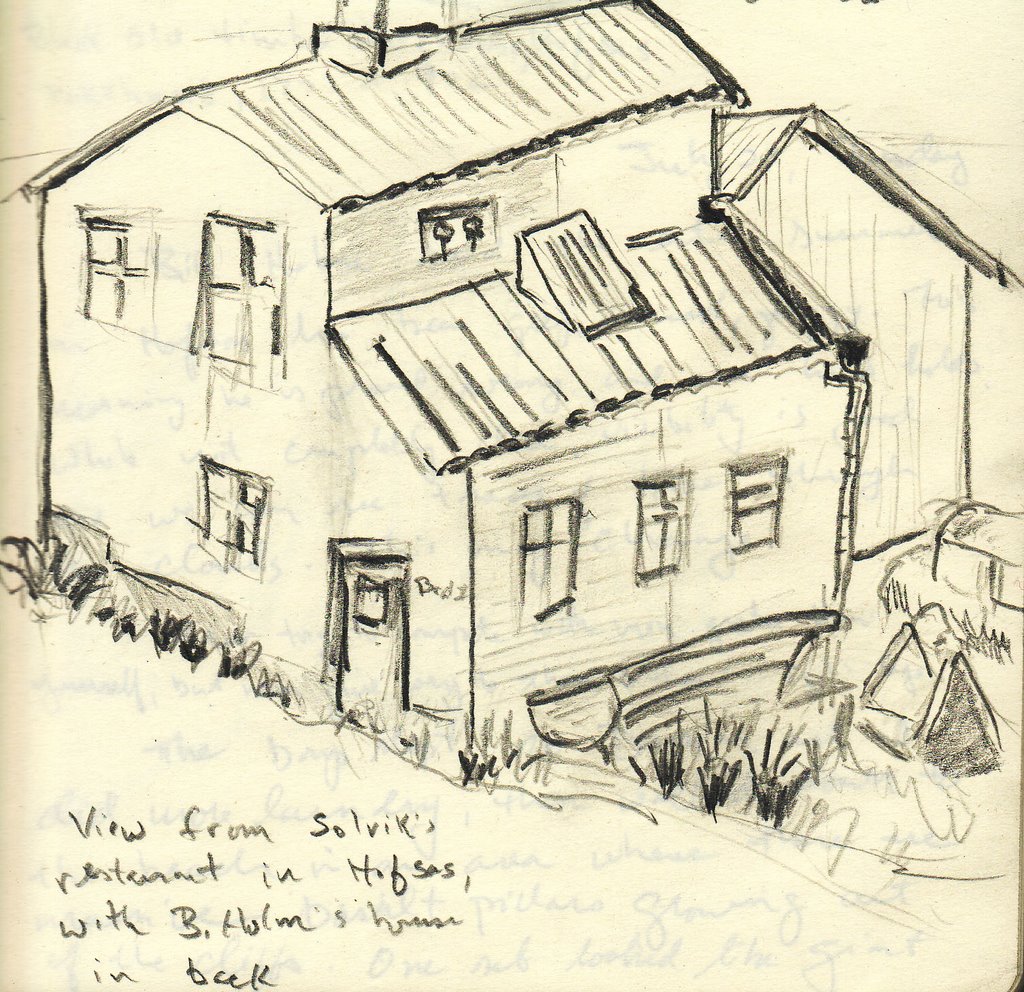
We call back to Solvik restaurant in Hofsos, afraid that we will arrive too late to be able to dine there. They assure us they will stay open to await our arrival. We don't want to miss Bill Holm's recommendation of the best fresh trout around. We aren't disappointed: it IS the best fresh trout around, and probably one of the best meals we will have in Iceland.

A perfect day. The reason why I came to Iceland. Heaven!

Jul 23, 2006

We meet Bill Holm

Sunday: Part 2

Hosfos is small. We wander along the historic area, thinking to find our lodging. Crossing a bridge, we see a woman walking towards us, waving excitedly. "Hi!", I say, "are you looking for your little lost lambs?" [Gabe, Peter and John groan inwardly...but I'm thinking that this is the woman who is renting us lodging, that she was expecting us, and that she has found us!] The woman looks at me quizzically, and gently explains that she is greeting her friend--who is walking right behind us. Augggh.

Not having happened on our lodging, we decide to take a more scientific approach. We call the phone number, and are directed to a small shop where Solveig, the daughter of Gudrun and Valgeir (owners of the guesthouse), awaits us. She takes us to our lodging, which is an entire house, about 30 years old. It has a somewhat cheesy, '80's decor, and is very clean and comfortable, with 4 bedrooms, a bath, a large kitchen, and a sitting room. It is huge, by our recent standards, and less than what we paid for last night's tiny, bathroom-less cabin! It is about 9 pm so the market has closed--we'll get groceries tomorrow. In the meantime, laundry is a priority. Solveig shows us where we can do some laundry, at one of their other houses, and after we get our laundry underway I decide to go in search of Bill Holm.

[Special laundry update: a number of times during this trip we asked where a laundromat might be. This was the wrong question. The question should have been, "why are there no laundromats in Iceland?" Entrepreneurs, this is your hot tip.]

Holm, you may remember, is the author of Eccentric Islands, Coming Home Crazy, and a number of other books I have enjoyed. It was Bill who sparked my interest in Iceland. He is a Minnesotan of Icelandic ancestry. As I read his essays that mentioned Iceland I thought I should familiarize myself with some Icelandic literature, never having read any. I started with the sagas and with Halldor Laxness, and was immediately hooked. Bill teaches two, one-week writers' workshops in Hofsos each year (along with other authors). He bought an old fisherman's cottage in Hofsos, and stays here most of the summer to write.

Solveig had pointed out Bill's cottage to me, so I head right up to the door and knock. No answer. It doesn't take much thinking to come to the conclusion that there is only one place that anyone could be in Hofsos at night, if they are not at home. I make an about face and walk a few yards to the Solvik Cafe...a lovely old building with a broad porch. I look in the door and sure enough, Bill is there dining with friends. How do I know it is him? Well, no one looks like Bill Holm but Bill Holm.

I don't want to interrupt his dinner, so I walk back to his cottage, and leave a note in the book I have brought him as a gift (Brighten the Corner Where You Are, by Fred Chappell). In the note I remind him of my phone call some 5 months before, tell him where we are staying, and say I'd love to meet him if he has time.

John and I go back to tend to the laundry, and by the time we return to our house guess who is standing in the driveway with Gabe, Peter, and an unfamiliar woman? Meanwhile a lot of confusion ensues regarding two women staying in a renovated garage on our property, a lack of hot water, and Bill trying to help them with his cell phone. It all gets straightened out, the woman returns to her cold shower, and we invite Bill into our kitchen.

It is fun talking to Bill, for I feel as if I know him already, having read so many of his thoughtful, funny, autobiographical essays. Gabe, Peter, John and I all sit around the kitchen table with Bill Holm as we chat about politics (the Alcoa plant, among other things), literature, and places to see in Iceland. Peter keeps Bill's water glass filled, in a most host-like fashion, that being all we have to offer. Only after Bill leaves does it occur to me that we could have offered him coffee! We find out that Bill is currently at work on two books, one of which will be called "Windows of Brimnes," the windows being those of his fisherman's cottage, Brimnes, here in Hofsos. I am really eager to read this book when it is published! Here is his "window":


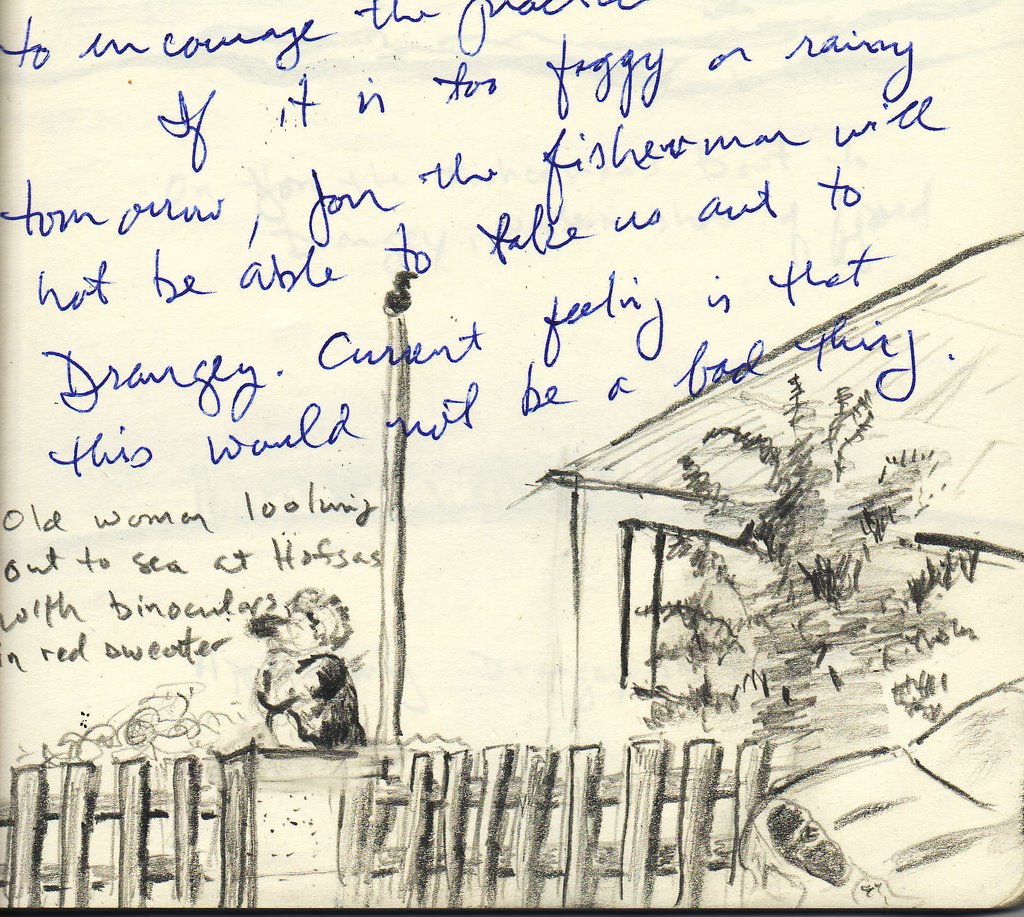
Bill complains that the weather hasn't been good this summer, and that Hofsos has been foggy for weeks. Tonight, for example, you can't see across the fjord (Skagafjordur), and you can't even see Drangey Island. You can't see at all.

This comment, however, plants an idea in my mind...

I was really scared when we climbed Mt. Eldfell in Heimaey, and I have been worrying, increasingly, about climbing Drangey. The island consists of sheer cliffs that are nearly 700 feet high. I have seen pictures of the trail up the cliff, and it is daunting...terrifying, even. On the other hand, Wincie has climbed Drangey, Judith has climbed Drangey, Bill himself has climbed Drangey. When we asked our youthful hostess, Solveig, if she had climbed Drangey (remember, she has lived in Hofsos all her life), she replied that no, she is scared of heights...

As my worrying has increased, and as I have verbalized it more, John has started to worry as well. So the idea Bill plants is that possibly it will be too foggy to go out to Drangey Island. Granted, this is one of the top three things I longed to do while in Iceland. And I have already phoned "Farmer Jon" (who is the boat captain and honorary "Earl of Drangey") to place our reservation for the trip tomorrow. But, if it is too foggy for the boat to go out, then it is out of my hands...

After Bill Holm leaves, and a perfectly wonderful day comes to a close, I go to sleep asking myself, "do I feel lucky?"

Apr 12, 2006

My Essay

Icelandair Contest, 3/1/06

Behold a desperate woman--my spirit is in Iceland, but my body is not. Unite my body and spirit in Reykjavik!

My obsession for Iceland was born in books. The words of Snorri Sturluson, Haldor Laxness, Bill Holm, W.H. Auden and Olaf Olafsson consumed me.

The Sagas ignited a passion in me. I long to commune with the spirits of the warrior poets at Pingvellir.

Laxness’ The Fish Can Sing was so mesmerizing that as soon as I finished it I turned back to page one and began again.

Laxness, his home

A shrine.

I yearn to divine

his words

still suspended in the air.

I am absorbed by Icelandic film, language, natural wonders, bloggers. I seek to share my fledgling Icelandic phrases with Icelanders in the coffee shops, museums and hot pots of Reykjavik. I crave Brennevin and pylsa, hunger for the cleanest water in the world and the freshest fish. I ache to see the Aurora Borealis, listen to rimur, and meet huldufolk. My obscure passion confuses and bewilders my family--but that does not deter me.

Meanwhile, I gaze north.

An eager whisper escapes my lips:

Iceland, O! Iceland!

This is a true story. This is me.

Winning Entry

And The Winner Is...

A big thanks to everyone who entered the Sebastian Spring Break contest. We loved your stories and are truly impressed with your creativity.

So, without further adieu, we're please to announce Elizabeth Tubergen from Lookout Mountain, GA, as the lucky winner.

.

Elizabeth has won:
- Roundtrip airfare for TWO from Baltimore/Washington (BWI), New York
(JFK), Boston (BOS), Orlando (ORL) or Minneapolis/St. Paul (MSP)
- Three (3) nights hotel in a double room in Reykjavik
- Blue Lagoon Tour
- Roundtrip Airport/Hotel transfers

Here is a copy of the winning entry:

"Ever since I was a wee lass I have wanted to visit Iceland.
Icelandic landscapes enchant me. When I was young, my dad gave me a calendar
(you know, one of those free ones from the office) that was full of rich photographs from around the world. I immediately wanted to visit all of the places, especially Iceland. I want to go to Iceland, but I can’t afford it right now because I am a college student, and I am very poor
and have debts.

In addition to the lifelong fascination that I have with Iceland, many of my favorite artists are from Iceland, which makes it all the more interesting to me. I want to go to the sculpture
museums, and see the works of sculptures that are rarely shown anywhere else. I love the music that comes out of Iceland. Besides these things, I want to go to Iceland to relax. After a tough semester at school, the Blue Lagoon looks awfully nice. Please pick me."

Comments, anyone? Which essay would you have chosen?